Introduction
What if your online course could give every student personalized feedback — without you being live, without a VA, and without burning yourself out? That’s not a far-off dream. It’s exactly what Dr. Stephanie Thrower, psychologist and AI course coach, is doing right now with her “mini labs.”
In a recent conversation on the AI Amplified Podcast, Stephanie broke down how she builds interactive, AI-powered course experiences that go way beyond passive video watching. And it’s simpler than you might think.
If you’ve been putting off building your course because it feels overwhelming, or you’ve built one that isn’t getting results, this is the episode that’s going to shift your thinking.
What Is a Mini Lab (and Why It Works Better Than a Course)?
Stephanie deliberately avoids the word “course.” She calls her offers mini labs — and there’s a psychological reason for it.
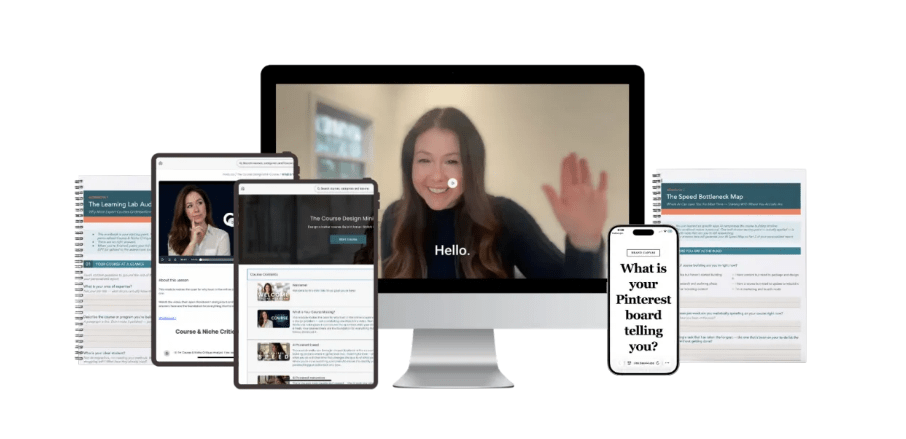
Traditional courses are passive. Students watch, maybe take notes, and then close the tab and never come back. Mini labs flip that model. They’re short, focused, and built around active engagement. The student does something with the material — they fill out a workbook, answer prompts, and interact with an AI tool that gives them real results.
The format works especially well for busy entrepreneurs and coaches who don’t have hours to sit through lecture-style content. A well-designed mini lab can be completed in an afternoon, and the student walks away with personalized insights — not just information.
The Three-Part Structure That Changes Everything
Every mini lab Stephanie builds follows the same simple structure:
- A short video (no more than 10 minutes) introducing the concept
- An interactive Google Doc workbook where students answer guided questions
- An AI prompt or embedded chatbot that analyzes the workbook and gives personalized feedback
That last piece is where the magic happens. Stephanie has trained her AI tools to analyze student responses the same way she would as a psychologist — so the feedback feels thoughtful, specific, and actually useful.
And because the workbook stays in the student’s Google Drive, they have a record of their own insights to revisit as they grow.
How to Add AI Tools to Your Course Right Now
You don’t need to be a developer to start adding AI-powered moments to your course. Stephanie shared some simple starting points:
- Create a custom GPT or Mind Pal chatbot loaded with your course content so students can search for recordings, links, or resources without digging through folders
- Write an AI analysis prompt at the end of a workbook so students can paste their answers and get instant feedback
- Use a voice chatbot to let students practice skills like sales conversations or client communication in real time
Each of these tools adds a layer of responsiveness — it shows your students that you’ve thought about where they get stuck, even when you’re not there.
Why Your Course and Your Marketing Plan Should Be Built Together
One of the most surprising insights from this conversation: when you build your course with AI, your marketing content practically writes itself.
Because your course is designed around your clients’ real pain points, the AI systems you build already know the transformation you’re offering. That means your sales page, your email sequence, and your social content can pull directly from the same source.
Stephanie calls this integration — and it saves enormous time compared to treating course creation and marketing as two separate projects.
If you would like to learn more about Stephanie’s course, here is the link: https://learn.coachingwithdrthrower.com/the-course-design-mini-lab
Key Takeaways
- Mini labs (short, interactive courses) outperform traditional passive courses for engagement and transformation
- The three-part structure — video, workbook, AI feedback — gives students personalized results without requiring you to be live
- Simple tools like custom GPTs or Mind Pal chatbots can dramatically improve the student experience
- Building your course with AI naturally informs your marketing plan
- Start small: a mini lab can be built in a weekend and used as an entry-point offer to lead clients deeper into your work
Conclusion
If you’ve been sitting on a course idea, this is your permission slip to start smaller and smarter. You don’t need 12 modules and a six-week launch. You need one focused transformation, a simple structure, and the right AI tools to make the student experience feel personal and powerful.
Watch the full conversation with Dr. Stephanie Thrower here.
And if you’re ready to build your own mini lab with support, come join us in the AI Amplified Entrepreneur community on Skool.

 AI Coaching with Angelina
Leave a comment